
Aldolase
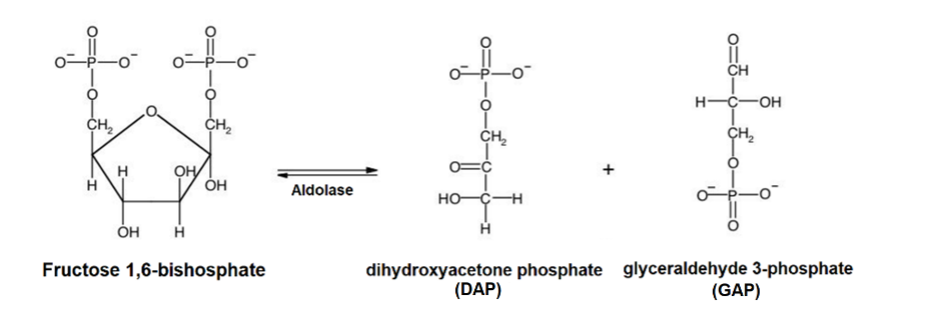
It catalyzes the conversion of fructose 1,6-bisphosphate into two triose molecules, glyceeraldehyde-3-phosphate and dihydroxyacetone phosphate, in the fourth step of glycolysis.
The enzyme is present throughout the body, but it is found in particularly high concentrations in muscle tissue (both skeletal and cardiac), the liver, and the brain. Since it is especially abundant in these tissues, elevated aldolase levels in the blood are likely indicative of cellular damage (cytolysis) in the liver or muscles.
Aldolase levels above the normal range in the blood are associated with:
- Muscle diseases: such as Duchenne muscular dystrophy, dermatomyositis, polymyositis, and limb-girdle muscular dystrophy.
- Liver diseases: including hepatitis, cirrhosis, and other chronic and acute liver conditions.
- Other conditions: levels may also increase during myocardial infarction, in the presence of neoplasms or gangrene, and with the use of hepatotoxic drugs, anthelmintics, and insecticides.
Low aldolase levels are usually not associated with medical problems or pathological consequences. Therefore, they are not considered clinically significant.
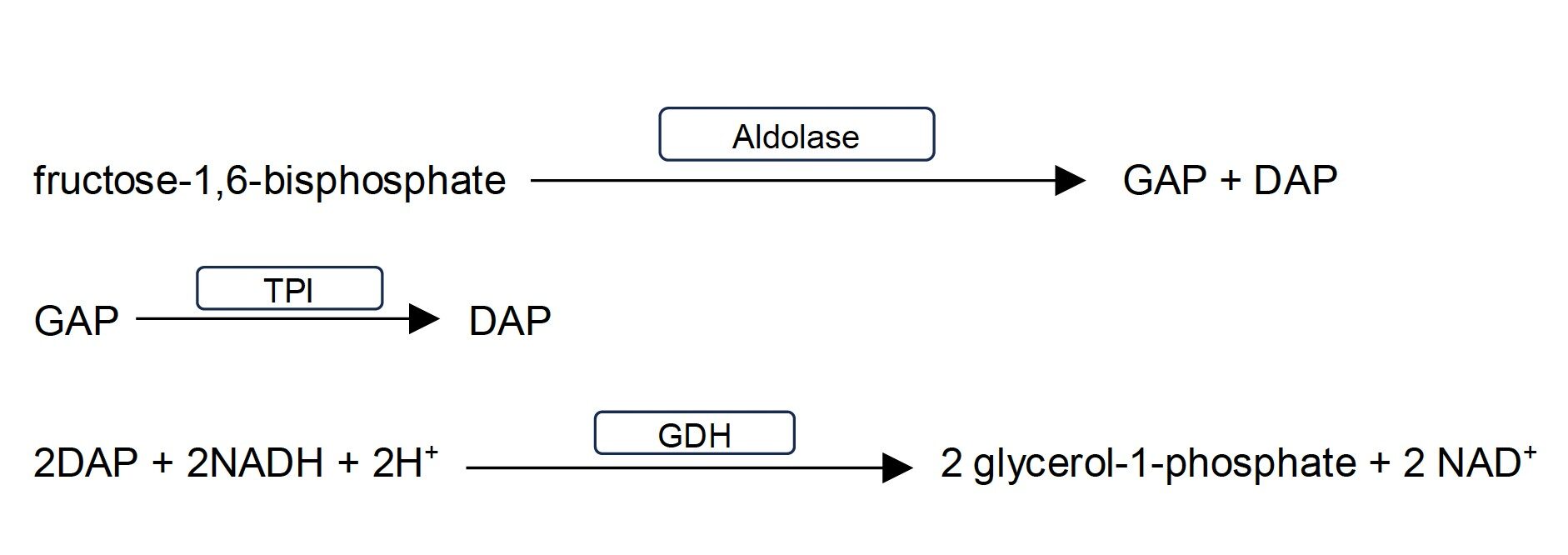
LTA test is a UV enzymatic assay that use TPI-GDH (Triosephosphate Isomerase-Glycerol-3-Phosphate Dehydrogenase) method.
Aldolase converts fructose-1,6-bisphosphate (F-1,6-DP) into glyceraldehyde-3-phosphate (GAP) and dihydroxyacetone phosphate (DAP).
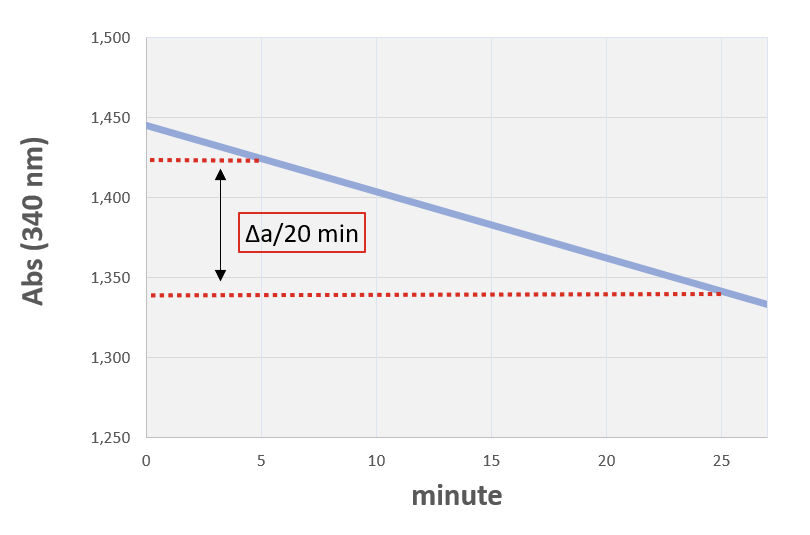
The addition of Triosephosphate isomerase (TPI) and Glycerophosphate dehydrogenase (GDH), together with NADH, converts dihydroxyacetone phosphate into glycerol-1-phosphate. The amount of aldolase present in the sample is determinated calculated by measuring the decrease in absorbance at 340 nm caused by due to the conversion of NADH into NAD+
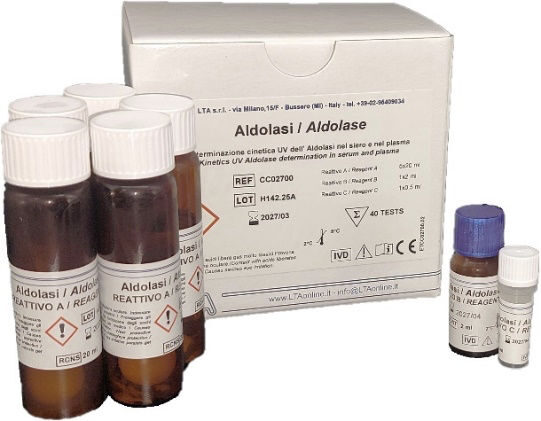
Package contents:
| Reagent A | 5 x 20 ml (lyophilized) |
| Reagent B | 1 x 2 ml |
| Reagent C | 1 x 0,5 ml |