
ACE (Angiotesin Converting Enzyme)
Angiotensin-converting enzyme (ACE) is a glycoprotein that catalyzes the following reaction:
ANGIOTENSIN I (10 amino acids) → ANGIOTENSIN II (8 amino acids)
The ACE test is primarily used to help diagnose and monitor sarcoidosis.
Elevated levels of ACE activity are found in serum of patients with active sarcoidosis, and occasionally in premature infants with respiratory distress síndrome, as well as in adults with tubercolosis, Gaucher’s disease, leprosy, and various other pathologic conditions involving lung and liver diseases.
Significantly low ACE levels may indicate:
- Chronic liver disease
- Chronic kidney failure
- An eating disorder called anorexia nervosa
- Steroid therapy
- Therapy for sarcoidosis
- Underactive thyroid (hypothyroidism)
Medications can affect results: ACE inhibitors (used to treat high blood pressure) can lower ACE levels.

The LTA test is a rapid and convenient spectrophotometric kinetic method that utilizes the synthetic tripeptide substrate N-[3-(2-furyl)acryloyl]-L-phenylalanylglycylglycine (FAPGG).
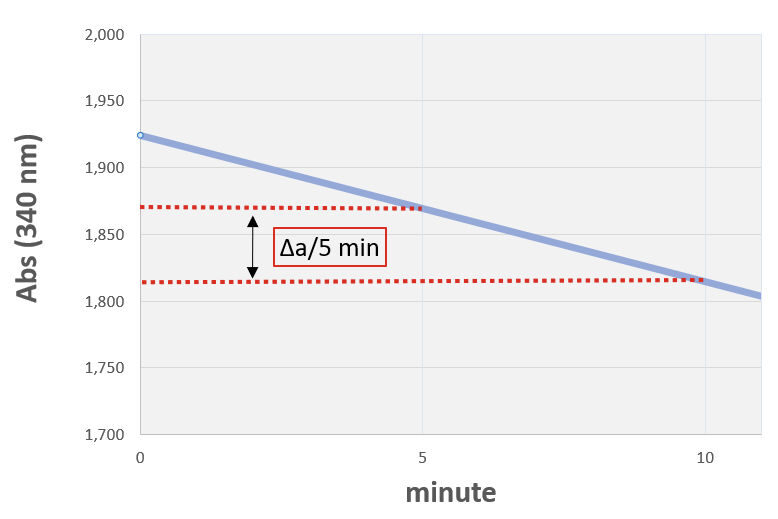
Angiotensin-converting enzyme (ACE) catalyzes the hydrolysis of the substrate furanacryloylphenylalanylglycylglycine (FAPGG) into furanacryloylphenylalanine (FAP) and glycylglycine. This hydrolysis is associated with a decrease in absorbance, which is measured at 340 nm and is proportional to the enzyme activity.
FAPGG + ACE FAP + Glycylglycine
Package contents:
| Reagent 1 | 6 vials lyophilized (FAPGG 28 mmol/l) |
| Reagent 2 | 2 x 15 mL Buffer pH 8.4 |
Calibrator kit and Control Set kit are available separately.